- Λεπτομέρειες
- ngnm
- English
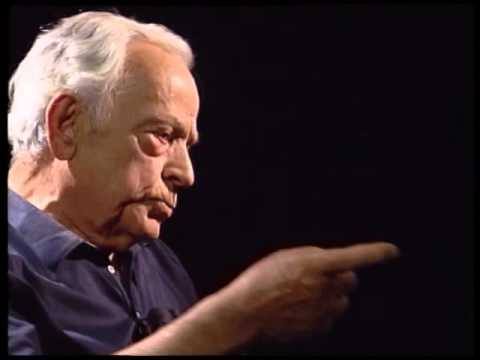
With the death of Yannis Tamtakos on 4 January at the age of 100, we could say that the last chapter of a historical journey of outstanding importance was written, which, however, remains largely unknown, pushed to the margins of official historiography, not excluding the version coming from the camp of the Left. This is the course charted by the Internationalist group animated by Agis Stinas during the years of occupation, whose members included Cornelius Castoriadis, Demosthenes Voursoukis and, of course, Yannis Tamtakos.
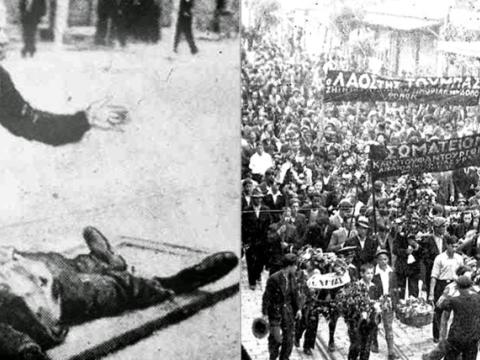
Yannis Tamtakos' first contact with the revolutionary movement came through the Archiomarxist movement, as a member of which he was a leading member in the workers' uprising of May '36 in Thessaloniki. In the midst of Metaxas' dictatorship he was exiled in 37 to Gavdos and during the six years or so of his exile he came into contact with the ideas expressed by Stinas and his group, the KDEE, to which he joined, leaving the Pouliopoulos tendency, to which he had previously belonged. With the escape of himself and Stinas in '42, the members of the group were linked in Athens and recorded remarkable activity, which will be referred to below. The purpose of this brief introduction, however, is not a mere listing of biographical data, nor is it a tribute to the memory of a recently deceased revolutionary. Rather, we hope to initiate a discussion on the importance of the example of Yannis Tamtakos for us today. An example whose value is, we believe, manifold and which is extremely relevant because of a number of reasons, beyond the obvious ones - his ethos, his militancy, his dedication to the project of social emancipation - which will be touched upon below.
Tamtakos never ceased to say that he was not an intellectual, but a simple labourer who failed to complete his schooling, having been forced to work from a particularly young age. Of course, education - unlike education, which is another thing - is not provided by any mechanism separate from everyday life, charged with this task, as is the case with school, but is instead the fruit of experience. The truth is, therefore, that Tamtakos had a profound political education, which he owed to his participation in the revolutionary workers' movement and his socialization through it-the title of his book of memoirs, "Memories of a Life in the Revolutionary Movement," is possibly indicative of his awareness of this fact.
Let us bear in mind that we are talking about a time when such a process of positive socialisation could still be carried out by the labour movement, as it had not yet reached its final decline under the crushing weight of Stalinism and bureaucratisation. Solidarity and opposition to the established class were the components that constituted the socio-anthropology of the proletariat, being at the same time the elements that provided the fertile ground for the emergence of the type of individual that Yannis Tamtakos advocated. An anthropological type that modern capitalism is no longer able to produce or...
- Λεπτομέρειες
- ngnm
- English
Stavros Kouchtsoglous*
It has been centuries since the bourgeois invented the means of voting, in order to suppress the desires of the people, and to keep them in misery, for so many years to make them believe that he - the hungry, the ragged, the miserable - is the Sovereign, and they are his servants. And for 120 years now I too, the worker - industrialist or farmer - have believed their lie as truth, their mockery as seriousness. And I have been cursed all over, and have suffered for generations to bring "the best" into things, to serve me, and these...
- Λεπτομέρειες
- Walter Ranieri
- English
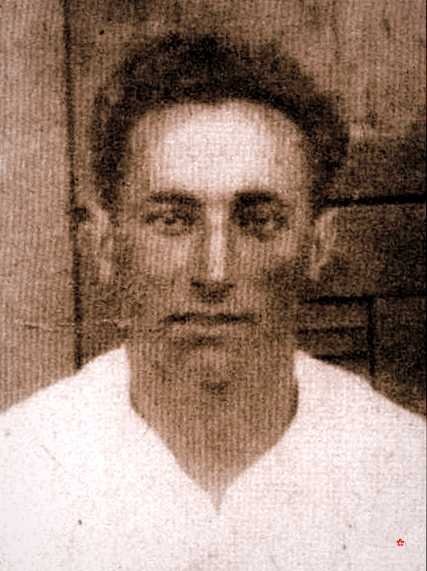
Το 1915, αλλά σε άγνωστη σε μας ημερομηνία, γεννήθηκε ο αναρχικός César Terron Abad στο Fabero της León της Ισπανίας. Τον Δεκέμβρη του 1933 συμμετείχε με μια ομάδα αναρχικών στην επίθεση στον στρατώνα της τοπικής φρουράς.
Κατά τη διάρκεια του εμφυλίου πολέμου, αφού πολέμησε στη μάχη του El Mazuco στην Αστούριας, το 1938 σχημάτισε μια ομάδα τριάντα περίπου ανταρτών που συνέχισε τον αγώνα κατά του φρανκισμού στις περιοχές Fabero και Ancares, με επιθέσεις και εξάλειψη φασιστών στην San Martín de Moreda, Bustarga, Villar de Otero, Vega de Espinareda και Fresnedo.
Πέθανε στις 21 Ιούλη 1940 στη Vega de Espinareda...
- A Big Part of the Human Whole is Still Treated as Property: Femicides in Greece
- Kropotkin’s Siberian Diaries
- The Macedonian Question and the recent war in former Yugoslavia in historical perspective
- The role of American imperialism in Greece
- Balkan Federalism - The social question and the national question in the idea of Balkan federalism
- Agis Stinas: A Greek revolutionary
- Konstantinos Speras: The Life and activities of a Greek Anarchosyndicalist
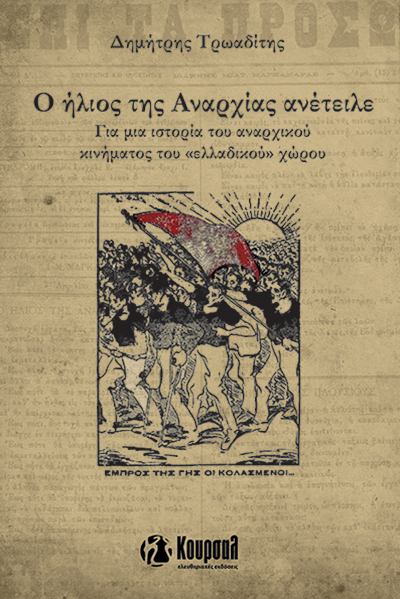

Στο κτήριο της Ελληνικής κοινότητας της Μελβούρνης στις 18/07/2019
Με τον Ελευθεριακό στο Αυτοδιαχειριζόμενο Στέκι Πέρασμα, 22/01/2018